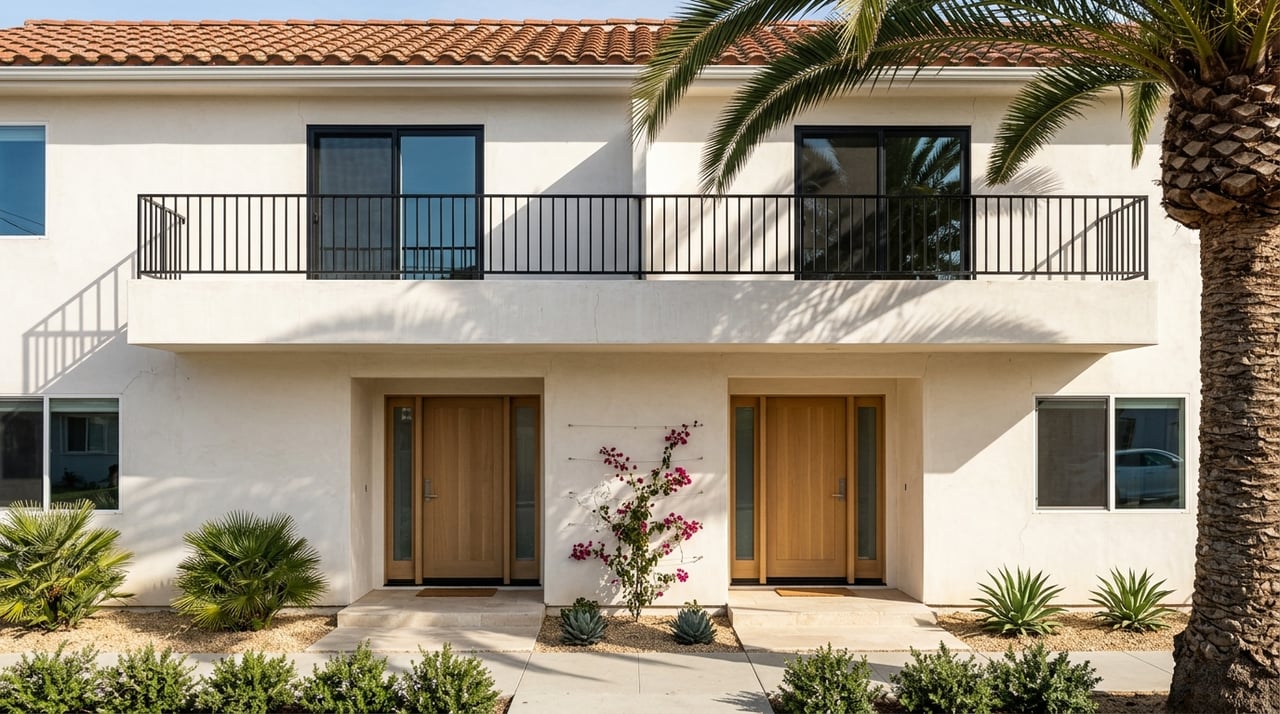
If you want to buy in South Oceanside but the monthly payment feels heavy, house hacking can make the numbers more workable. In a coastal market where Oceanside’s median owner-occupied home value is $770,300 and median gross rent is $2,303, even one well-planned rental stream can meaningfully offset your housing cost. The key is choosing a strategy that fits local rules, realistic financing, and the property itself. Let’s dive in.
Why house hacking fits South Oceanside
South Oceanside attracts buyers who want a coastal location and a property that can do more than one job. If you plan to live in the home and generate income from part of it, the area can support that goal, but only if you structure the plan around long-term rentals rather than flexible vacation-rental assumptions.
That distinction matters because Oceanside’s rules sharply limit short-term rental options in many cases. For most buyers, the strongest approach is simple: live in one portion of the property, rent the rest on a long-term basis, and underwrite the deal conservatively from day one.
Best house hacking strategies
Buy a 2-to-4-unit property
One of the most direct house hacking plays is buying a duplex, triplex, or fourplex and living in one unit. Freddie Mac allows mortgages for 2-to-4-unit owner-occupied primary residences, and rental income from the other units may be added to borrower income under its guidelines.
That makes small multifamily especially relevant in South Oceanside, where a second, third, or fourth unit can help offset a high coastal payment. The practical point is that this should be treated as owner-occupied financing for a primary residence, not a pure investor loan structure.
If you are comparing properties, focus on layouts that already separate living areas well. A cleaner unit mix, distinct entrances, and practical parking can make day-to-day ownership easier and support more stable leasing after closing.
Add an ADU or JADU
If you buy a single-family property, an ADU or JADU may create a second income stream. Oceanside says a detached ADU can be up to 1,200 square feet, an attached ADU can be up to 50% of the primary dwelling, and a JADU can be up to 500 square feet.
The city also notes state minimum standards that allow an 850 square-foot studio or one-bedroom ADU, or a 1,000 square-foot ADU with two or more bedrooms, along with a 16-foot height limit and four-foot side and rear setbacks in the minimum framework. In plain terms, that gives buyers several paths, but the site plan still needs to work.
Oceanside’s rules make some ADU projects more practical than others. Garage conversions that displace primary-residence parking do not require replacement parking for the ADU, detached ADUs may be built above existing accessory structures, and the city says one parking space is required unless an exemption applies.
From a financing angle, Fannie Mae says ADU income can be counted on certain loans if it is documented. It also applies a 25% reduction for vacancy and caps qualifying ADU income so it does not exceed 30% of the borrower’s qualifying income, with a comparable rent schedule required in the appraisal.
Rent spare bedrooms
If a separate unit is not in the budget, renting spare bedrooms can still improve affordability. This is often the lowest-cost way to house hack because you are working with the space you already have rather than taking on a larger acquisition or construction project.
Lender treatment is more limited than with a full separate unit. Fannie Mae says boarder income may be allowed in some cases, including HomeReady, if the borrower documents at least 9 of the most recent 12 months of rent and shared residency, and up to 30% of qualifying income may come from boarder income.
That means bedroom rent may help your real-world monthly budget even when it does not fully strengthen your mortgage file at purchase. If this is your plan, think of it as a cash-flow support tool first and a qualification tool second.
South Oceanside rules you need to check
Short-term rental limits
A common mistake is assuming you can buy near the coast, add an ADU, and use it as a flexible short-term rental. In Oceanside, that assumption can break your numbers fast.
The city defines a short-term rental as a stay of no more than 30 consecutive days. It also says hosted short-term rentals are principal-residence rentals where the owner remains on site, while non-hosted short-term rentals are properties where the owner does not live on site.
As reviewed on the city page, new non-hosted short-term rentals are prohibited outside the Coastal Zone. The city also requires short-term rental permits for all short-term rental properties with limited exceptions, requires a primary-residence affidavit for hosted properties, and says permits are non-transferable.
The city lists a $250 permit fee and a $215 inspection fee. Just as important, Oceanside says properties with an ADU or JADU permitted on or after September 9, 2017 cannot be used for short-term rental activity in either the accessory unit or the primary residence.
For most South Oceanside buyers, this is the biggest takeaway in the entire strategy discussion. If your house hack depends on short-term rental income from an ADU, you should treat that plan as non-viable unless the property and permit history clearly support something different under current city rules.
Zoning and coastal status
Before you get attached to a rental concept, verify the parcel details. Oceanside tells owners to use its Land Use and Zoning GIS Map Viewer to confirm whether a property is in the Coastal or Non-Coastal area, and that matters because short-term rental rules differ by zone.
This step is especially important in South Oceanside, where coastal location is part of the appeal. The beach setting supports demand, but it also raises the need for precise property-level review instead of broad assumptions.
HOA and private restrictions
If you are buying a condo or property in an HOA, city approval is not the only layer that matters. Oceanside notes that private covenants, conditions, and restrictions can add limits, and the city does not enforce those private rules.
That means you should review HOA documents and property restrictions early, especially if your plan involves room rentals, leasing flexibility, or accessory-unit use. A deal that works on paper can still fail if private rules block your intended setup.
How to evaluate whether a property pencils out
Start with the right property features
The best house hacking properties in South Oceanside usually have separate rentable spaces, existing garages or non-livable areas, enough parking, and site layouts that fit ADU setbacks and height rules without major reconstruction. These features reduce friction and often lower the risk of expensive redesign.
In practical terms, the easier it is to create privacy and legal rental space, the stronger the house hack. Garage conversion potential and room for a detached ADU over an existing accessory structure can be especially useful under Oceanside’s rules.
Underwrite long-term rent only
If you want a stable analysis, use long-term rent assumptions from the start. Oceanside’s short-term rental framework is restrictive, and ADU or JADU rentals must be for terms longer than 30 days.
That is why a conservative underwriting test should ignore vacation-rental upside unless a specific property clearly qualifies and you have verified the rules. In most cases, long-term rent is the cleaner and safer baseline.
Model the full monthly cost
When you run the numbers, do not stop at principal and interest. Your analysis should include taxes, insurance, utilities, maintenance, HOA dues if any, permit costs, and possible construction overruns if you plan to add an ADU or convert space.
For ADU-related qualification, remember that lender guidelines may reduce projected rent for vacancy and may cap how much income counts. That gap between market rent and qualifying rent is one reason disciplined buyers use conservative assumptions instead of best-case projections.
A practical South Oceanside game plan
If you are serious about house hacking in South Oceanside, keep the plan straightforward. Look for a duplex through fourplex if you want the cleanest live-in investment structure, or target a single-family home with real ADU potential if the lot, layout, and parking support it.
Then verify city rules before you write an offer, especially around ADUs, short-term rental restrictions, coastal status, and permit history. Finally, test the deal based on long-term rental income and full operating costs so your numbers still work without optimistic assumptions.
That kind of discipline is what turns house hacking from a trendy idea into a durable ownership strategy. In a market like South Oceanside, the buyers who win are usually the ones who stay local, stay compliant, and stay realistic about income.
If you want help identifying investor-friendly properties, evaluating rental potential, or planning the next step after closing, OC Investments & Management can help you approach South Oceanside with a practical, numbers-first strategy.
FAQs
What is house hacking in South Oceanside?
- House hacking in South Oceanside usually means you live in the property and rent out another unit, an ADU, a JADU, or spare bedrooms to offset your housing costs.
Can you use an ADU as a short-term rental in Oceanside?
- No. Oceanside says ADU and JADU rentals must be for terms longer than 30 days, and properties with an ADU or JADU permitted on or after September 9, 2017 are restricted from short-term rental use in both the accessory unit and the primary residence.
Can you buy a duplex and live in one unit in South Oceanside?
- Yes. Freddie Mac guidance allows owner-occupied financing for 2-to-4-unit primary residences, and rental income from the other units may be considered under its rules.
Does Oceanside allow garage conversion ADUs?
- Yes. Oceanside notes that garage conversions that displace primary-residence parking do not require replacement parking for the ADU, though other property-specific rules still need to be checked.
How should you analyze a house hack property in South Oceanside?
- Use long-term rental assumptions, include the full housing and operating costs, verify local permit and zoning rules, and avoid relying on short-term rental income unless the property clearly qualifies under current city rules.
Do HOA rules matter for house hacking in Oceanside condos?
- Yes. Oceanside says private covenants and HOA restrictions may add limits, and buyers should review those documents because the city does not enforce private rules.